
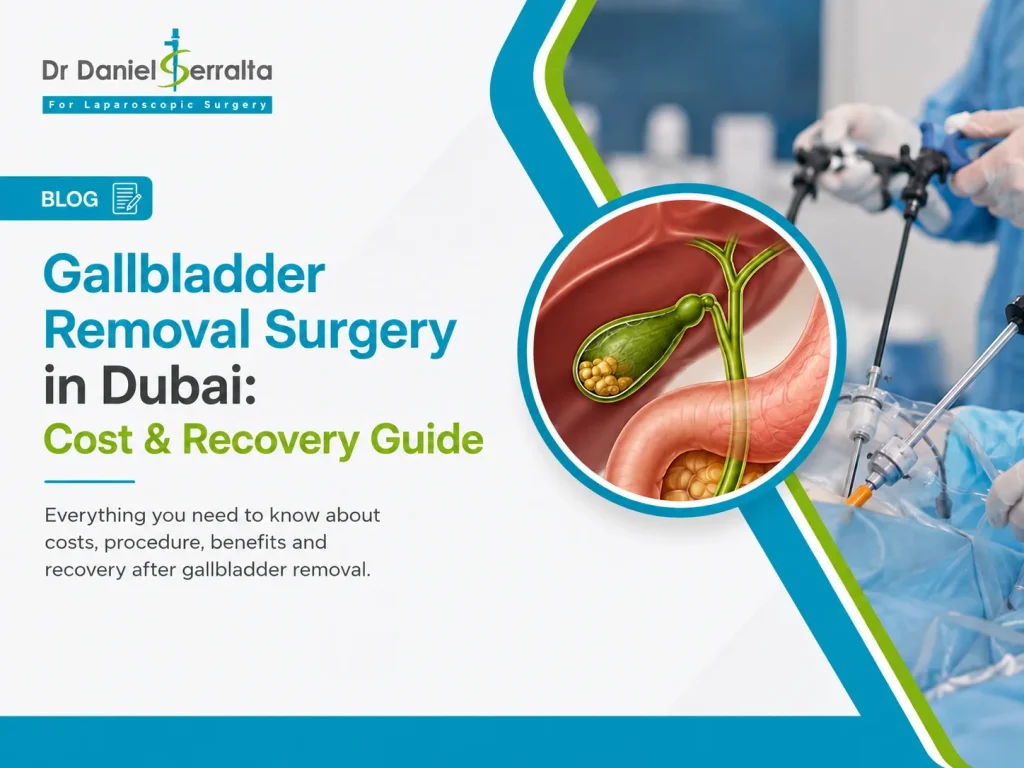
Upper abdominal pain that comes in waves, especially after a fatty meal, if this sounds familiar, your gallbladder may be the problem. As a general and colorectal surgeon with over 20 years of experience, I have performed numerous gallbladder procedures with excellent outcomes. Gallbladder removal in Dubai is today one of the most commonly performed and safest surgeries available. This guide gives you everything you need, the causes, the procedure, the cost, and what recovery really looks like.
Gallbladder Removal in Dubai: Why So Many Patients Need It
The gallbladder is a small, pear-shaped organ that sits just beneath the liver. Its job is to store bile, a digestive fluid the liver produces to break down fats. When something goes wrong inside the gallbladder, it causes significant pain and disrupts daily life.
The most common reason patients come to me for gallbladder removal in Dubai is gallstones. But gallstones are not the only trigger. Several underlying conditions can make surgery necessary, and understanding them helps patients make informed decisions.
The Real Reasons Behind Gallbladder Disease: What Causes the Problem
Many patients assume gallstones are the only reason for gallbladder surgery. In reality, several conditions can make laparoscopic cholecystectomy in Dubai necessary. Let me walk you through each of them clearly.
Gallstones (Cholelithiasis)
Gallstones are the leading cause. They form when substances in bile, mainly cholesterol or bilirubin, harden into solid particles inside the gallbladder. Many people carry gallstones for years without symptoms. Others experience sudden, severe pain in the upper right abdomen, nausea, vomiting, and fever. When gallstones start blocking bile ducts or causing repeated attacks, removal becomes the only reliable solution.
Acute and Chronic Cholecystitis
Cholecystitis means inflammation of the gallbladder. Acute cholecystitis typically occurs when a gallstone blocks the cystic duct, trapping bile and causing infection. Chronic cholecystitis develops after repeated episodes of inflammation, gradually thickening and scarring the gallbladder wall. Both forms cause persistent pain and require surgical intervention.
Gallbladder Polyps
Gallbladder polyps are growths that project from the inner lining of the gallbladder wall. Most are small and benign. However, polyps larger than 10mm carry a meaningful risk of becoming cancerous. In these cases, I recommend removing the gallbladder as a precautionary measure rather than waiting for the condition to worsen.
Biliary Dyskinesia
This is a functional disorder where the gallbladder does not contract properly. Even without gallstones, the gallbladder fails to empty bile effectively, causing symptoms identical to gallstone disease, cramping, nausea, and discomfort after meals. Diagnosis requires a special nuclear medicine scan called a HIDA scan, and surgery typically resolves the symptoms completely.
Gallbladder Cancer
Though relatively rare, gallbladder cancer requires prompt and decisive treatment. When detected early, surgical removal of the gallbladder, sometimes along with surrounding tissues, offers the best chance of cure. Early detection is key, which is why I always advise patients not to ignore persistent upper abdominal symptoms.
Keyhole Gallbladder Surgery: How the Procedure Works
Keyhole gallbladder surgery, medically known as laparoscopic cholecystectomy, is the standard approach I use for the vast majority of patients. It involves making three to four tiny incisions in the abdomen. A small camera and specialised instruments are then inserted to remove the gallbladder with precision.
The entire procedure usually takes between 45 minutes and one hour under general anaesthesia. Because there are no large cuts involved, blood loss is minimal, the risk of infection is lower, and recovery is significantly faster compared to open surgery.
Open surgery is reserved for complex cases, such as dense adhesions, severe inflammation, or situations where the anatomy is unclear. In my practice, the vast majority of patients (around 98%) are suitable for the laparoscopic approach.
Gallbladder Surgery Cost in Dubai: What to Expect
One of the first questions patients ask me is about gallbladder surgery costs in Dubai. I understand that financial clarity matters just as much as medical clarity. The cost of laparoscopic cholecystectomy in Dubai approximately ranges between AED 15,000 and AED 45,000, depending on several factors such as hospital facility, anaesthesia fees, surgeon’s experience and the complexity of the case. Most part of the insurance policies will cover the surgery in which case you may only need to pay a small part of copayment, according to you own insurance.
At Saudi German Hospital Dubai, where I practice, we offer transparent pricing and work with most major insurance providers. I always encourage patients to discuss cost and insurance coverage during their consultation so there are no surprises.
What Does Recovery Look Like After Gallbladder Removal in Dubai?
Recovery after keyhole gallbladder surgery is remarkably smooth for most patients. Most people go home the day after surgery. Mild soreness around the incision sites and some right shoulder tip pain from the gas used during the procedure are normal and settle within a few days.
Most patients return to light daily activities within one week. A full return to normal life, including work, is typically possible within two to four weeks. I advise patients to follow a sensible diet during the first days after surgery, listening to their bodies, as the digestive system adjusts to functioning without the gallbladder. Bile still flows from the liver directly into the small intestine, digestion continues normally in the vast majority of people.
Follow-up care is an important part of my practice. After your surgery, I will monitor your recovery closely and will be always available to address any concerns.
Stop Waiting – Get the Expert Care You Deserve Today
Gallbladder pain only gets worse with time. Leaving it untreated increases the risk of complications such as bile duct blockage, pancreatitis, and infection. The sooner you act, the simpler and safer the treatment.
I offer expert gallbladder removal in Dubai with a minimally invasive approach, personalised care, and a commitment to your long-term wellbeing.
Book AppointmentDo not let fear or uncertainty hold you back. Book your consultation today. Relief is closer than you think.
Conclusion
Gallbladder problems are common, but they are completely solvable. Whether you are dealing with gallstones, cholecystitis, or another gallbladder condition, gallbladder removal in Dubai through laparoscopic cholecystectomy offers a safe, minimally invasive, and highly effective solution. With fast recovery, transparent costs, and expert surgical care, there is no reason to keep living in pain. Take the first step today.Frequently Asked Questions:
Is gallbladder removal in Dubai a major surgery?Not when done laparoscopically. Keyhole gallbladder surgery involves tiny incisions, minimal blood loss, and a fast recovery. Most patients go home within 24 hours and return to normal life within one to two weeks. It is one of the most commonly performed and safest surgeries performed today.
What is the cost of laparoscopic cholecystectomy in Dubai?The cost typically ranges between AED 15,000 and AED 45,000, depending on the hospital, surgeon’s expertise, complexity of the case, and insurance coverage. During your consultation, you will receive full transparency on pricing before any decision is made.
Can I live a normal life without a gallbladder?Absolutely. The gallbladder is a storage organ, not a vital one. After removal, bile flows directly from the liver to the small intestine. Most patients experience no long-term dietary restrictions, though a gradual, low-fat diet in the first few weeks helps the body adjust comfortably.
Why should I choose a specialist for gallbladder removal in Dubai?Gallbladder surgery requires precision, especially when there are adhesions, inflammation, or bile duct proximity concerns. An experienced surgeon reduces the risk of complications, converts fewer cases to open surgery, and ensures faster, smoother recovery. With over 20 years of surgical experience and a practice at Saudi German Hospital Dubai, I provide the standard of care your health deserves.
How do I know if I need gallbladder surgery?Common signs include recurring upper right abdominal pain — especially after fatty meals, nausea, vomiting, bloating, and fever. However, a proper diagnosis through ultrasound and clinical assessment is essential before surgery is recommended. I evaluate each patient individually and only recommend surgery when it is genuinely needed.
Is keyhole gallbladder surgery available in Dubai?Yes, and it is the preferred approach. Laparoscopic cholecystectomy, or keyhole gallbladder surgery, is routinely performed in Dubai with excellent outcomes. I perform this procedure at Saudi German Hospital using the latest minimally invasive techniques, ensuring minimal discomfort and the fastest possible recovery for every patient.