Diastasis Recti Surgery vs Tummy Tuck: Key Differences
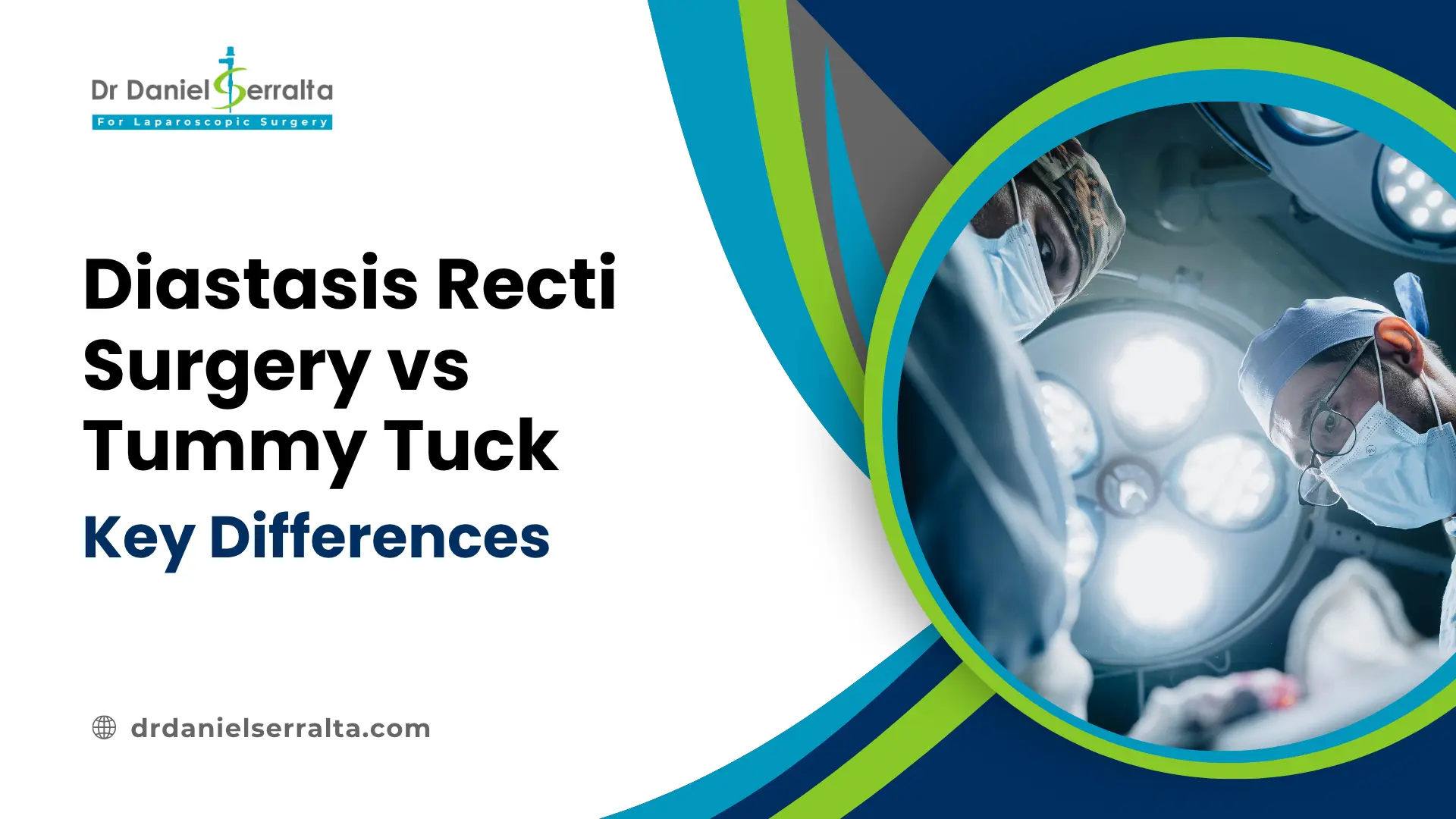
When a patient comes to see me, all mixed up about Diastasis Recti Surgery and a Tummy Tuck, I always tell her the basic truth: they are totally different. Both surgeries focus on the tummy area. However, what they are meant for, how they are done, and what they achieve are all different.
In a situation where you are suffering from muscle separation due to pregnancy or significant weight loss, knowing the distinction between Diastasis Recti Surgery and tummy tuck surgery is a great help in deciding the right treatment. Here’s a simple explanation from me.
Diastasis Recti Surgery: What It Really Treats
Diastasis Recti Surgery is a procedure that aims to mend the split abdominal muscles. The condition manifests when the rectus abdominis muscles get separated. It is a very common condition post-pregnancy. Besides, it can be the result of excessive weight gain or incorrect heavy lifting. It also usually comes together with an umbilical hernia, that can be repaired in the same procedure.
During the surgery, I usually do a very accurate Rectus Abdominis Repair. I tighten the muscles that have been separated and fix them in place. Thus, the core strength is restored. In addition, the posture is improved, and the back pain is alleviated.
Unlike cosmetic procedures, Diastasis Recti Surgery is functional. It addresses:
- Abdominal muscle separation
- Core weakness
- Back discomfort
- Bulging abdomen despite exercise
- Poor abdominal tone
Many patients think exercise alone can fix severe separation. That is not true in advanced cases. When the gap is significant, surgical correction becomes the most effective solution.
Diastasis Recti Surgery vs Tummy Tuck: Understanding the Core Difference
Abdominoplasty, which is also known as a tummy tuck, is mainly aimed at getting rid of excess skin and fat in the abdominal area. It works to beautify and reshape the belly region. Essentially, it is a beauty operation that intends to give the abdomen a flatter and tighter look.
Meanwhile, Diastasis Recti Surgery concentrates on the issue of separated abdominal muscles. The purpose goes beyond just the appearance as the surgery aims to give back the core with strength and stability.
During Diastasis Recti Surgery, I do Rectus Abdominis Repair, which means that I bring the muscles back together to close the gap and thus improve core strength and function. On the contrary, a Tummy Tuck is more about skin tightening and contouring the abdomen than it is about directly correcting the muscle separation functionally.
To illustrate, some patients need both procedures. For certain situations, a combination of tummy tuck and diastasis recti repair may be the solution to both muscle weakness and to excess skin. However, sufficient grounds for one to consider them as the same procedure do not exist since each has a different primary purpose.
What Happens During a Tummy Tuck Surgery?
In tummy tuck surgery, they remove excess abdominal skin. They also contour the area for a flatter appearance. This is ideal for patients who have:
- Loose hanging skin
- Stretch marks below the belly button
- Stubborn fat deposits
- Skin laxity after weight loss
A Tummy Tuck may include muscle tightening. However, the main goal is cosmetic reshaping. It does not focus deeply on restoring functional muscle.
So if your main concern is muscle separation and core weakness, Diastasis Recti Surgery may be more appropriate.
When Do I Recommend Diastasis Recti Surgery?
I recommend Diastasis Recti Surgery when:
- The muscle gap is more than 3 cm
- There is visible abdominal bulging
- Hypopressive exercises do not improve the condition
- There is chronic lower back pain
- The abdomen looks protruding despite being slim
- There is no significant loose skin
Rectus Abdominis Repair strengthens your core again. Patients often tell me they feel stronger and more stable after recovery. It is not just about appearance. It is about function.
Can Tummy Tuck and Diastasis Recti Be Combined?
If someone has both loose skin and muscle separation, it may be combined, but the surgical approach changes dramatically: for a tummy tuck, plastic surgeons need to do a large scar and replace the belly button. For diastasis recti repair, I perform the repair through 3 1 cm incisions below the bikini line, and hence almost invisible.
This approach:
- Repairs the muscle wall
- Removes excess skin
- Improves abdominal contour
- Restores firmness
However, I always personalize the plan. Not everyone needs both. That is why proper clinical evaluation is critical before deciding.
Recovery Differences You Should Know
Recovery depends on the extent of the surgery. After Diastasis Recti Surgery, patients may experience:
- Mild to moderate discomfort
- Temporary swelling
- Core tightness
- Gradual return to activity in a few weeks
After tummy tuck surgery, recovery may involve:
- More visible scar
- Longer downtime if excess skin removal is extensive
In both procedures, I advise avoiding heavy lifting during healing. Core strengthening starts gradually once healing is stable.
Results: Functional vs Cosmetic Goals
This is where patients must be clear. Diastasis Recti Surgery results include:
- Improved core stability
- Better posture
- Reduced abdominal bulge
- Enhanced strength
Cosmetic results are usually excellent, as a secondary advantage/result
Tummy Tuck results include:
- Flatter abdomen
- Removal of sagging skin
- Better waist contour
- Smoother abdominal appearance
If you are choosing based on aesthetics alone, tummy tuck surgery may be sufficient. If you want structural correction, Diastasis Recti Surgery is the better solution.
Restore Your Core with Expert Diastasis Recti Surgery
If you are struggling with abdominal bulging, weak core muscles or persistent separation after pregnancy or weight changes, do not ignore the signs. The right treatment like Diastasis Recti Surgery in Dubai, can make a real difference in both function and confidence.
Take the first step toward a stronger core and a flatter abdomen today.
Conclusion
Choosing between Diastasis Recti Surgery and Tummy Tuck should not be confusing. The key is identifying the root problem. If the issue is muscle separation, Rectus Abdominis Repair is essential. If the concern is loose skin, tummy tuck surgery works best.
If both exist, combining tummy tuck and diastasis recti repair may give the most comprehensive result. I always prioritize safety, function, and natural outcomes. Proper evaluation ensures the right decision.
Frequently Asked Questions
1. Does a tummy tuck fix diastasis recti?
Occasionally, but it depends largely on the experience of the plastic surgeon, which usually doesn’t focus primarily on the functional results, but on the cosmetic ones.
2. What is the difference between Rectus Abdominis Repair and a tummy tuck?
Rectus Abdominis Repair focuses on stitching separated muscles together. A Tummy Tuck removes excess skin and reshapes the abdomen.
3. Is Diastasis Recti Surgery painful?
Mild discomfort is expected. However, pain is manageable. Most patients recover steadily within a few weeks.
4. Who is the best candidate for Diastasis Recti Surgery in Dubai?
Patients with confirmed muscle separation and persistent core weakness are ideal candidates. A detailed assessment determines suitability.
5. How do I know which procedure I need?
A proper clinical evaluation is essential. Imaging and physical examination help determine whether you need Diastasis Recti Surgery, a Tummy Tuck, or both.