Skip to content
Saudi German Hospital, Al Barsha 3, Dubai

Pilonidal sinus surgery in Dubai

Eight techniques exist and they are not equivalent. Two are still performed widely and should not be. Choosing correctly is what separates a sinus that is gone for good from one that returns within the year.

Operating theatre Consultation Recovery
AnaestheticGeneral or local
Hospital stayDay case
Back to workA few days
Scar remodellingUp to 12 months
Preferred techniqueCleft lift flap
Techniques covered8
Pilonidal sinus explained
What It Is

A tunnel in the skin, not just a lump

A pilonidal sinus is a small tunnel or opening in the cleft at the top of the buttocks, over the sacrum and coccyx, which fills with fluid or pus.

It generally begins as a cyst containing hair, dirt and debris. Untreated, that cyst becomes an abscess, and once treatment is delayed further the abscess develops into the tract that gives the condition its name.

  • Affects the inter-gluteal region over the sacrum and coccyx
  • Begins as a cyst, progresses to abscess, then to a sinus tract
  • Multiple tracts can form if treatment is delayed
  • Surgery is the only reliable way to clear it
Know The Difference

Cyst, abscess or sinus

Three terms used interchangeably that describe different stages of the same disease.

Pilonidal cyst
Cyst

A sac filled with material, liquid or solid. They vary considerably in type and size, and may sit quietly for years.

Pilonidal abscess
Abscess

A localised infection under the skin. Often develops when a cyst becomes infected, and the cavity frequently remains after the infection clears.

Pilonidal sinus
Sinus

A tract originating in a hair follicle, running under the skin between the buttocks. This is the chronic stage, and the one needing surgery.

Symptoms of pilonidal sinus
Signs & Risk Factors

What it looks like, and who gets it

The first sign is often nothing more than a small dimple in the skin. Once infected it progresses quickly to a cyst or abscess.

  • Pain when sitting or standing
  • Swelling with reddened, sore skin
  • Pus or blood discharge, often with an odour
  • Hair protruding from the lesion

Risk factors:

MaleThick body hairLong periods seatedOffice work or drivingSedentary habitsFamily historyOverweightPrevious occurrence
Surgical Options

Every technique, and whether it is worth having

Treatment depends on how extensive the disease is and whether this is a first occurrence or a recurrence.

An infected abscess needs drainage first, sometimes with antibiotics. For non-infected cases, or once infection is controlled, surgery is strongly recommended: it is the only way to avoid new tunnel branches forming and making later treatment considerably harder.

Excision with flap closureBest option
Preferred technique

Excision with flap closure

Widely recognised as the best option for pilonidal sinus, providing both a fast recovery and a low rate of disease relapse.

The cleft lift flap, also called the modified Karydakis or Bascom flap, addresses both simple and complex cases but requires specific training to execute precisely. It involves asymmetrical resection to flatten the natal cleft and relocate the surgical suture, with a flap created from the medial edge to close the defect away from the intergluteal cleft.

Because it modifies the buttock crease, hair and debris no longer accumulate there. The wound is sutured closed, which removes the need for ongoing dressing changes.

Discuss this option

Also offered, in selected cases

GIPS
Mild cases

GIPS

Removal of only the individual pits and tunnels rather than a wide excision. Typically suggested for mild cases, or as a preventive measure.

Laser treatment
Promising, unverified

Laser treatment

Laser energy removes infected tissue and seals the tract. Often recommended for recurrent or persistent disease, though not yet a verified technique: there are not enough studies to assure long-term results.

Endoscopic treatment (EPSiT)
Promising, unverified

Endoscopic treatment (EPSiT)

An endoscope removes hair and infected tissue, followed by heat or laser sealing. As with laser, promising but the published evidence is not yet sufficient.

Incision and drainage
Infected cases only

Incision and drainage

A small opening made in the abscess to drain pus. Relieves the acute problem but does not treat the sinus, so definitive surgery follows.

Limberg flap, Z-plasty
Salvage only

Limberg flap, Z-plasty

Very complex techniques with important aesthetic consequences. Reserved for recurrent cases where other techniques have already failed.

No longer recommended

Not recommended

Excision with direct wound closure

The sinus is removed and skin edges stitched together in the midline. This involves a high rate of failure, with the suture reopening and the sinus relapsing.

Not recommended

Excision with open healing

The old-school treatment. Healing can take two to five months and requires daily specialised dressing by a nurse or surgeon. It should never be recommended.

  1. Discharge
    Day 1Discharge

    Home the same day in most cases, with pain relief and dressing instructions.

  2. Back to work
    Within daysBack to work

    Recovery time depends on the procedure but is typically short. Most individuals return to work within a few days.

  3. Wound review
    Weeks 2 to 4Wound review

    Scheduled checks. Sitting comfort returns and normal activity resumes gradually.

  4. Scar remodelling
    Up to 12 monthsScar remodelling

    The scar continues to settle. Some irritation in this period is normal rather than a sign of failure.

Aftercare
Aftercare

Half the treatment happens after surgery

Pilonidal treatment is 50% surgery and 50% aftercare.

The operation clears the disease. What happens over the following weeks determines whether it stays cleared. Proper wound care is not an afterthought here, it is half the job.

  • Clean the site exactly as instructed, without harsh scrubbing
  • Change dressings regularly to keep the area clean and dry
  • Take pain relief as prescribed so you stay mobile
  • Increase activity gradually, avoiding anything strenuous early
  • Eat leafy vegetables, legumes and fibre, and stay hydrated
  • Watch for increased pain, swelling, warmth, redness or new drainage
  • Report a persistent fever, which can indicate a complication
  • Report any opening of the wound rather than waiting for review
  • Report purulent or foul-smelling discharge straight away
  • Come back if healing is slower than you were told to expect

Note: scar remodelling continues for up to a year, and some irritation in that period is normal.

Cost

Pilonidal sinus surgery cost in Dubai

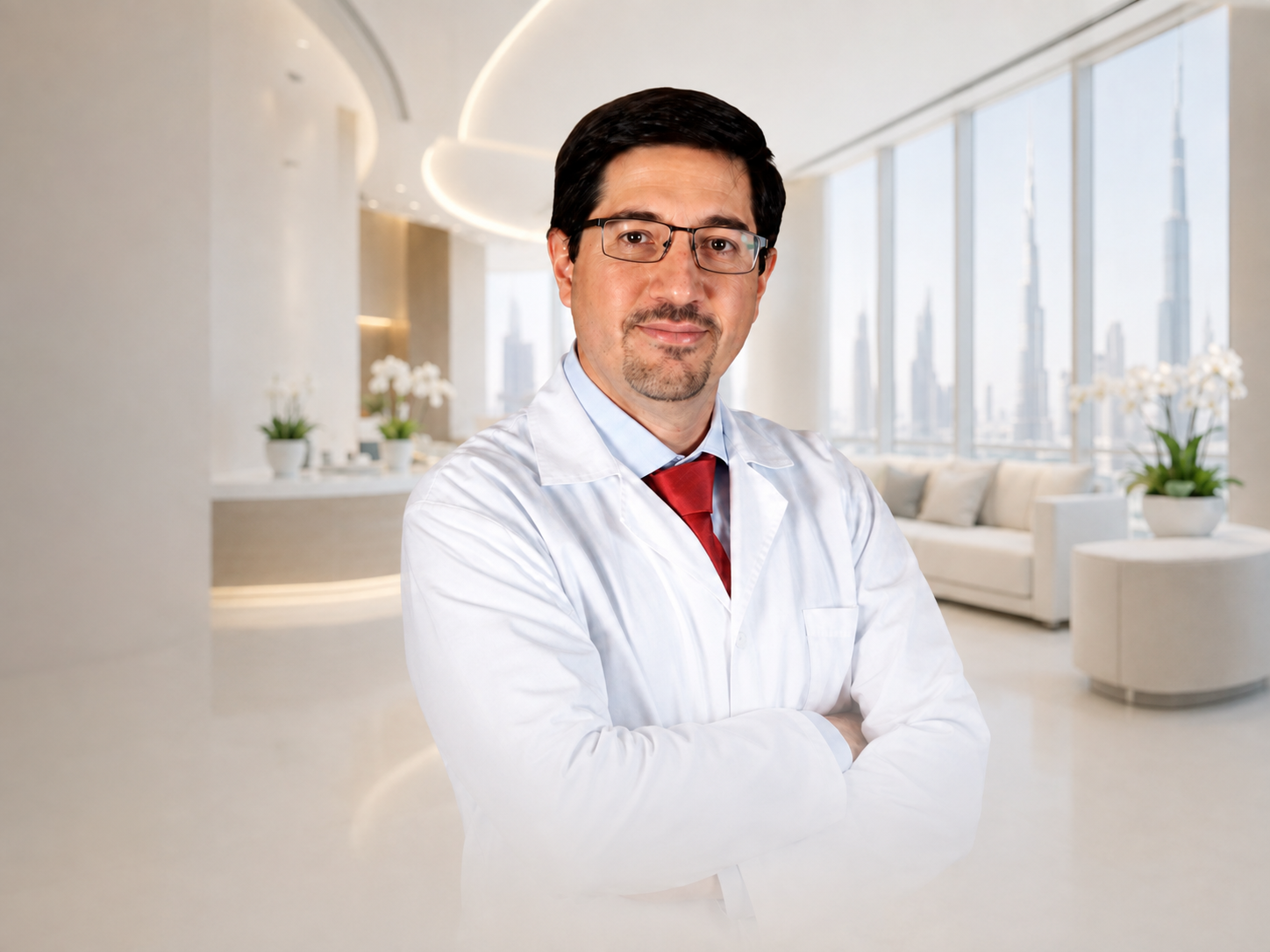
Cost varies with the procedure and with your individual case. Dr. Serralta has broad experience in advanced pilonidal surgery and offers competitive pricing across these treatments.

A detailed estimate is provided at consultation, once the extent of the sinus is established and the appropriate technique agreed.

  • Estimate given in writing after examination
  • Insurance and self-pay both accommodated
  • Follow-up wound reviews included

Quick enquiry

Send your details and the clinic will come back with an estimate and available appointment times.

Results

Before and after

Representative outcomes, shared with patient consent.

Extensive midline pilonidal disease before surgery
Extensive midline disease
Healed cleft lift, suture line off the midline
Cleft lift, suture off midline
Recurrent pilonidal sinus after prior surgery
Recurrent sinus after prior surgery
Revision flap healed at six weeks
Revision flap, healed at 6 weeks
Is there always a visible lump?

Most cases involve a painful lump near the tailbone that moves when pressed. Some present only with a draining sinus and no obvious swelling.

How is it diagnosed?+

Usually on symptoms and examination. High-resolution MRI with contrast or ultrasound is used where the tract needs mapping before surgery.

What causes a pilonidal sinus?+

Follicular occlusion, where pores in the tailbone area are stretched by friction and pressure from sitting, allowing hair and debris to become trapped.

Does being overweight make it worse?+

It can. Extra weight deepens the natal cleft, trapping more moisture and debris and increasing pressure on the area.

Can it become cancerous?+

Very rarely. Tissue removed at surgery is sent for analysis as standard to rule it out.

Can it appear elsewhere on the body?+

Pilonidal disease occurs in the buttock cleft. Similar abscesses elsewhere usually indicate a different condition such as hidradenitis suppurativa.

How do I know if it is infected?+

Severe pain, difficulty moving and foul-smelling drainage from the sinus, which may vary in colour.

What does the surgery cost?+

It depends which procedure suits your case. A detailed estimate is given at consultation once the extent of the sinus is clear.

Related Reading

More on pilonidal disease

Articles by Dr. Serralta on recurrence, recovery and how the condition progresses.

Recurrence

Why pilonidal sinus comes back after surgery

Recurrence is usually about technique selection and wound position, not bad luck.

Read more
Recovery

Healing guide for post-surgery patients

What to expect week by week, and the warning signs worth reporting.

Read more
Diagnosis

Pilonidal cyst versus pilonidal sinus

The same region, but different structures, progression and treatment.

Read more

Don't let discomfort hold you back

Early care leads to simpler solutions. Connect with our clinic today to book a confidential appointment.

Book Your Appointment

Reach out for a private consultation

Prompt, confidential appointments at Saudi German Hospital, Dubai. Reach out however you feel most comfortable.

Call or WhatsApp+971 56 805 4323
ClinicSaudi German Hospital, Hessa Street 331, West Al Barsha 3, Exit 36 Sheikh Zayed Road, Dubai
Consultation hoursSun–Thu: 8 am – 4 pm · Fri & Sat: Closed
LanguagesEnglish · Spanish · French · Arabic

Urgent medical inquiries? Call +971 56 805 4323 or send a message on WhatsApp for quick coordination.

Request a Consultation

Fill in your details and the clinic will contact you to confirm.


    Your information is private and confidential.

    Saudi German HospitalHessa Street 331, West Al Barsha 3, Exit 36 Sheikh Zayed Road, Dubai