
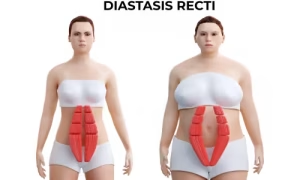
Diastasis recti, also called abdominal separation, is a condition in which the two sides of the rectus abdominis muscles become separated along the midline of the abdomen. It commonly occurs during and after pregnancy as the abdominal wall stretches to accommodate the growing uterus.
A common question is whether diastasis recti without surgery is possible. In many cases, conservative management involving appropriate exercise, physical therapy and changes to movement patterns can help improve abdominal strength, function and the distance between the muscles. However, the extent of improvement varies from person to person, and exercise should not be presented as a guaranteed way to completely close the separation. Current research supports exercise-based rehabilitation as a potential treatment, but the evidence remains variable and does not establish one universally effective exercise program.
Understanding the condition, the role of rehabilitation and when a surgical assessment may be appropriate can help patients make informed decisions about their care.
Understanding Diastasis Recti and Why It Happens
Diastasis recti occurs when the two sides of the rectus abdominis muscles move apart and the connective tissue between them, known as the linea alba, becomes stretched.
Pregnancy is a common cause because the abdominal wall undergoes significant physical changes as the uterus expands. Diastasis recti can also occur in people who have not been pregnant and may be associated with factors that place repeated strain on the abdominal wall.
Factors associated with abdominal separation can include:
- Pregnancy and the physical changes associated with it
- Repeated or excessive abdominal strain
- Activities involving heavy lifting or straining
- Changes in body weight that place additional stress on the abdominal wall
The presence and extent of diastasis recti should be assessed clinically rather than determined solely by the appearance of the abdomen or by a self-measured finger-width gap.
Is Diastasis Recti Without Surgery Actually Possible?
Yes, diastasis recti without surgery can be managed conservatively in many patients. Treatment may include targeted abdominal rehabilitation, physical therapy and guidance on how to perform everyday movements without excessive strain on the abdominal wall.
However, it is important to distinguish between improving the condition and completely eliminating the separation. Research has found that exercise can reduce the inter-rectus distance in some postpartum women, but the quality and consistency of the evidence vary between studies. Functional improvement may also be more important than the measurement of the gap alone.
There is also no single finger-width measurement that, by itself, determines whether surgery is necessary. A clinical assessment considers the location and extent of the separation, abdominal wall function, symptoms, associated conditions such as a hernia and the patient’s individual goals.
For some patients, conservative treatment may be appropriate. Surgical treatment may be discussed when there are persistent functional concerns, an associated abdominal wall hernia or other clinical reasons for considering an operative approach.
Diastasis Recti Exercises That May Support Rehabilitation
Exercise is an important part of conservative management, but there is no single exercise that has been established as the universal treatment for diastasis recti.
A rehabilitation program may include controlled breathing, deep abdominal activation, pelvic floor exercises and progressive strengthening. The program should be adapted to the individual’s symptoms, physical condition and stage of recovery. Evidence suggests that abdominal exercise can help reduce inter-rectus distance, although the certainty of the evidence varies.
Breathing and Core Activation
Controlled breathing can be incorporated into abdominal rehabilitation. Coordinating breathing with gentle activation of the abdominal muscles can help patients develop awareness and control of their core musculature.
Rather than focusing on forceful abdominal contraction, rehabilitation should emphasize controlled movement and appropriate muscle engagement.
Pelvic Tilts and Controlled Core Exercises
Gentle movements such as pelvic tilts and other controlled abdominal exercises may form part of a progressive rehabilitation program.
The appropriate starting point depends on the individual’s postpartum recovery, symptoms and overall health. Patients recovering from childbirth, particularly after a caesarean delivery or other complications, should discuss the appropriate timing of exercise with their healthcare provider. ACOG recommends gradually resuming physical activity after pregnancy according to the mode of delivery and the presence or absence of medical or surgical complications.
Progressing to More Challenging Exercises
As abdominal control improves, rehabilitation can progress to more demanding movements under appropriate guidance.
Exercises should be modified or stopped if they cause pain or pronounced abdominal bulging or doming. Some clinical guidance recommends avoiding or modifying movements such as sit-ups, crunches and certain planks when they produce excessive abdominal pressure or visible bulging.
The goal is not to avoid abdominal exercise altogether. Instead, exercises should be selected and progressed according to the individual’s ability and response.

How to Support Abdominal Separation With Daily Habits
Exercise is only one part of managing abdominal separation. Everyday movement can also be performed in ways that reduce unnecessary strain on the abdominal wall.
Helpful strategies may include:
- Rolling onto your side and using your arms when getting out of bed instead of performing a sudden sit-up movement.
- Exhaling during exertion rather than repeatedly holding your breath.
- Using appropriate lifting techniques when carrying a child or other objects.
- Avoiding excessive straining during bowel movements.
- Maintaining controlled abdominal engagement during everyday activities.
These strategies are intended to support movement and rehabilitation rather than guarantee that the separation will close. NHS physiotherapy guidance similarly recommends modifying movements that cause abdominal bulging and gradually strengthening the deep abdominal muscles.
Postpartum Ab Separation and the Importance of Timing
Postpartum abdominal separation often improves during the early months after childbirth. Some women experience substantial natural improvement during the first several weeks, while others may continue to have a noticeable separation for longer.
As recovery varies, an eight-week deadline should not be treated as a universal point at which diastasis recti must be resolved.
Women who continue to notice some sympyoms of diastasis recti like significant separation, abdominal bulging, weakness, back discomfort or difficulty with daily activities after childbirth may benefit from assessment by a healthcare professional or physiotherapist with experience in postpartum rehabilitation.
The appropriate time to begin or progress exercise also depends on the type of delivery and any pregnancy or postpartum complications. ACOG recommends that postpartum exercise be resumed gradually when medically safe.
Realistic Expectations for Non-Surgical Recovery
Recovery from diastasis recti does not follow one fixed timeline.
Some people may notice improvement as the abdominal wall naturally recovers after pregnancy. Others may benefit from a structured rehabilitation program over a longer period. Research has reported improvements in inter-rectus distance following exercise-based interventions, but studies differ considerably in the exercises used, the way diastasis recti is measured and the length of follow-up.
For this reason, it is not appropriate to promise that a particular exercise program will completely close the separation within a specific number of months.
The focus of rehabilitation should include abdominal strength, movement control, physical function and symptoms, rather than the width of the gap alone.

When Should Surgery Be Considered?
Surgery is not automatically required because a person has diastasis recti or because the separation measures a particular number of finger widths.
A surgical assessment may be appropriate when symptoms or functional problems persist despite appropriate conservative management, when an abdominal wall hernia is also present, or when there are other clinical reasons to consider surgical repair.
The decision should be based on an individual assessment rather than a measurement alone. A healthcare professional evaluates the abdominal wall, associated symptoms and treatment history before discussing whether continued rehabilitation or a surgical approach is appropriate.
Start With an Individual Assessment
If you are unsure whether your abdominal separation requires structured rehabilitation or a surgical opinion, an individual assessment can help clarify the available options.
Dr. Daniel Serralta, a Consultant colorectal surgeon and proctologist in Dubai, can assess your abdominal condition and discuss whether conservative management, further evaluation or a surgical consultation may be appropriate for your situation.
The goal is to understand the underlying condition and choose an appropriate treatment pathway based on your individual clinical needs.
Conclusion
Diastasis recti without surgery is a reasonable treatment approach for many patients, particularly when conservative rehabilitation can address their symptoms and functional concerns. Exercise and physical therapy may help improve abdominal strength and reduce the distance between the rectus muscles, although the degree of improvement varies and complete closure cannot be guaranteed.
If abdominal separation persists after pregnancy or is associated with pain, weakness, abdominal bulging or a suspected hernia, an appropriate clinical assessment can help determine the next step. For some patients, rehabilitation may be sufficient, while others may benefit from further evaluation and discussion of surgical options.
The most appropriate treatment depends on the individual’s condition rather than on the width of the separation alone.
Frequently Asked Questions
1. Can diastasis recti heal on its own without surgery?
Diastasis recti may improve naturally after pregnancy, particularly during the early postpartum period. Some patients may also benefit from structured exercise and physiotherapy. However, the degree of natural or exercise-related improvement varies, and complete closure varies.
2. How long does it take to improve abdominal separation?
There is no universal recovery timeline. Some postpartum changes improve during the first several weeks, while persistent separation may require a longer period of rehabilitation. Recovery depends on factors such as the extent of the separation, symptoms, overall health and the individual’s response to treatment.
3. What exercises should be avoided with diastasis recti?
Exercises do not need to be avoided solely because someone has diastasis recti. However, movements that cause significant abdominal bulging, doming or discomfort may need to be modified or temporarily avoided. Sit-ups, crunches and some plank variations may need modification depending on the individual’s symptoms and abdominal control.
4. Does postpartum abdominal separation affect every new mother?
Abdominal separation is common during and after pregnancy, but the extent varies between individuals. Not everyone will have the same degree of separation or experience symptoms.
5. Is it too late to improve diastasis recti years after pregnancy?
No. People can seek assessment and rehabilitation even years after pregnancy. The appropriate treatment depends on the current condition of the abdominal wall, symptoms and functional concerns. Cleveland Clinic notes that treatment can still be considered years after childbirth.
6. When is surgery considered for abdominal separation?
Surgery may be considered in selected patients when symptoms or functional concerns persist, when an associated abdominal wall hernia is present, or when clinical assessment indicates that surgical repair may be appropriate. The decision should not be based on a particular finger-width measurement alone.